

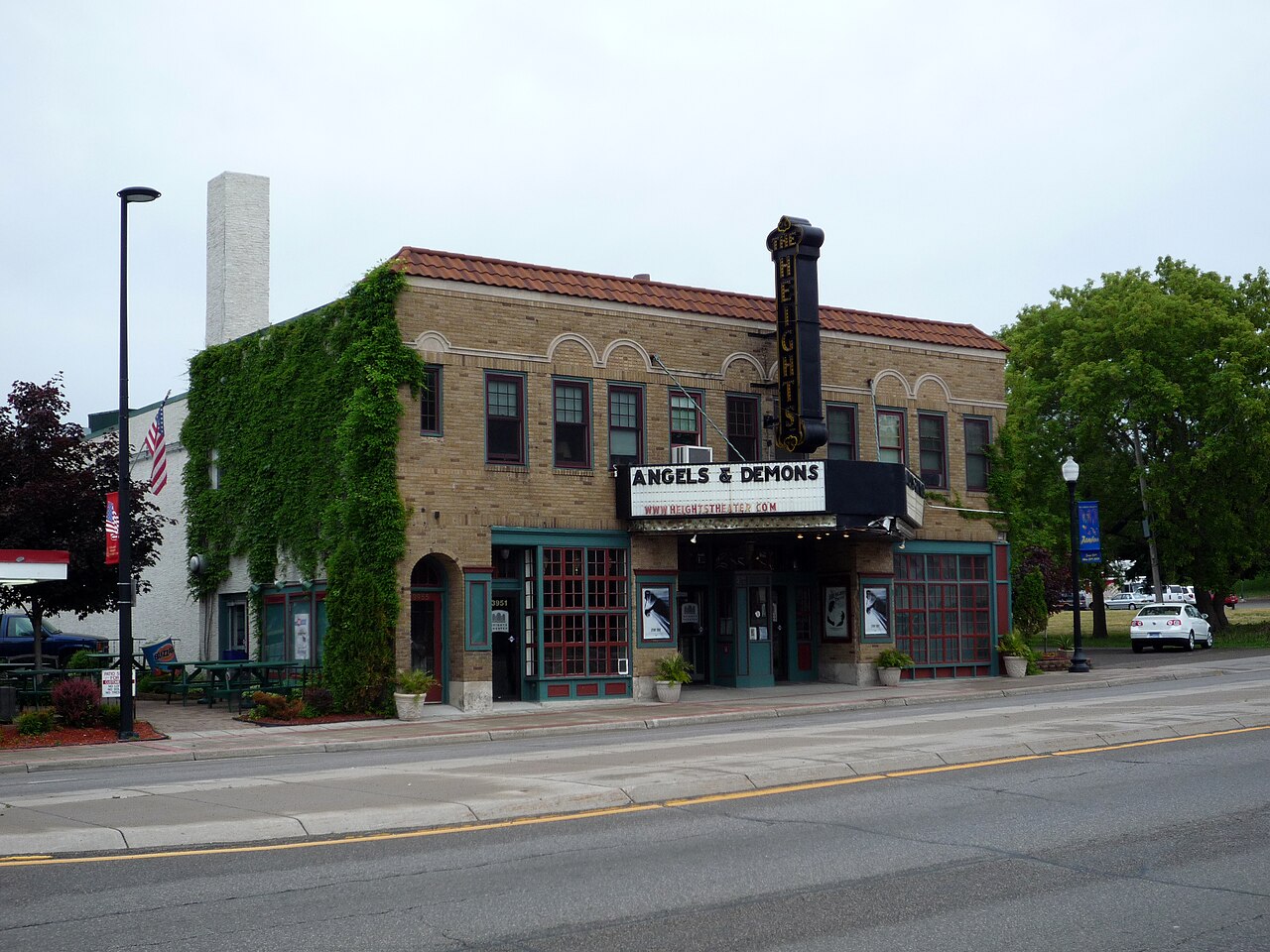
Thomas Lowry's streetcar suburb.
Columbia Heights wasn't farmed into existence the way most Anoka County cities were. It was built into existence, on purpose, by one company, for one purpose. In 1893, Thomas Lowry, owner of the Minneapolis Street Car Company, secured more than 1,000 acres in Northeast Minneapolis and south Anoka County. The land was earmarked primarily for worker housing. That same year his streetcar line was extended north along Central Avenue, three blocks into what would become Columbia Heights, up to 40th Avenue NE.
That streetcar line didn't exist to take people somewhere else. It existed to fill the houses Lowry was building along it. The streetcars ran from 1893 to 1951, and almost every original Columbia Heights house sits within easy walking distance of where they used to stop.
A $150 gold prize and a Village in 1898.
The name itself came out of a contest. In 1892 the Minneapolis Improvement Company Northeast asked the public to name their new development. They received 2,281 submissions. The winning entry was “Columbia Heights,” submitted by Olive Louise Thornbergh, who collected a $150 prize in gold.
The Village of Columbia Heights officially formed on March 14, 1898, when it separated from FridleyTownship. At the moment of separation it consisted of 1,696 acres, 100 citizens, and 20 houses. On July 21, 1921, the City Charter was adopted and the Village became a City. By that point the streetcar suburb had filled out into a recognizable neighborhood grid of bungalows, four-squares, and small craftsman homes serving the workers of Northeast Minneapolis's industrial corridor.
Central Avenue and the worker bungalows.
The foundations of Columbia Heights's oldest housing stock are the foundations of their era, quarried Platteville limestone and fieldstone, with soft lime-based mortar. They were built before modern drainage technology existed. They were designed to weep: builders expected moisture to migrate slowly through the porous stone and mortar, and the open joints gave it somewhere to go.
That design works fine for the first fifty years. After a hundred and twenty winters of freezing and thawing, and Columbia Heights has been freezing and thawing since 1898, the lime mortar has crumbled out of the joints, the stones have shifted, and the wall no longer weeps gracefully. It leaks. By the 1920s and 30s, the standard was shifting to early concrete block. By the 1940s, post-war infill brought cinder block. Each foundation type has its own failure mode, and Columbia Heights has all three living next to each other on every block.
The south edge of the Anoka Sand Plain.
Columbia Heights sits at the southernmost edge of the Anoka Sand Plain, the glacial outwash plain laid down 12,000 years ago by meltwater from the Grantsburg sublobe of the Des Moines Lobe. The upper soil horizon here is sand-dominated but more mixed than at the center of the plain in Andover or Blaine. There's till underneath in most spots, often only a few feet below the surface, and the contact zone between sand above and clay-rich till below creates a perched water table that pressurizes basements after heavy rain.
On the topography of a streetcar suburb, narrow lots, alleys, mature trees, original grading long since lost, a perched water table is the worst-case scenario. There's nowhere for the water to go horizontally because the houses are so close together. There's nowhere for it to go vertically because the till layer blocks it. So it sits at footing depth and waits.
The post-war infill.
The lots that hadn't been built on by 1930 mostly got built on between 1945 and 1960, small ranches and minimal-traditional starter homes on cinder block, exactly the same product that was going up across the metro at the same time. Columbia Heights also famously banned manufactured homes by statute, which is what prompted the neighboring community of Hilltop to incorporate as its own city in 1956 to protect its mobile home parks from annexation.
What that means for basement waterproofing today is that you can walk one block in Columbia Heights and pass a 1905 fieldstone bungalow, a 1928 early-block four-square, and a 1953 cinder-block rambler. Three completely different foundations, three different failure modes, three different right answers when the basement gets wet.
Why Columbia Heights basements leak today.
A Columbia Heights leak is one of three stories, sometimes all three on the same street:
- The 1895–1925 fieldstone or limestone bungalow. Lime mortar has crumbled out of the joints after 100+ winters. The wall now leaks where it used to weep. Modern interior finishes have made the problem worse by trapping moisture.
- The 1920s–1940s early concrete block home. Mortar joints failing, often with bowing walls from a century of clay pressure against the foundation.
- The 1950s post-war cinder block rambler. Wall has hundreds of mortar joints. Original drain tile silted. Surface drainage shifted by every owner since 1955. Perched water table sits at footing depth every spring.
What this means for your home.
Columbia Heights is one of the most foundation-diverse cities we work in. The right system for a 1905 limestone bungalow on 39th Avenue is not the right system for a 1953 block rambler on Innsbruck. We diagnose first. We tell you what era your foundation is, what specifically is failing, and whether you need a full interior system or a smaller drainage correction.
For the oldest fieldstone homes, the conversation is rarely about replacing the wall, it's about giving the water somewhere to go without making the wall's job worse. That usually means an interior drain tile system and disciplined humidity management. For the post-war block homes, it's often the same answer. For the newer infill, the high-leverage opening move can be a sump replacement, a downspout and grading correction, and a flush of the existing tile. Those are obvious contributors worth investigating first, addressing them, depending on your goals for the space, can save thousands and extend the time before a full system is necessary.
Columbia Heights has been a neighborhood for 130 years. The houses worth keeping dry are worth keeping dry the right way.