
Start with the matching base package, then add only confirmed adjustments.
A simple downspout extension is a couple hundred dollars. A regrade that requires removing trees, lifting concrete, or coordinating with a fence is several thousand. A full-perimeter exterior drainage project with French drain runs is the most expensive scope on this site.
The one-side adjustment is applied to the two-side regrading base only after the scope is confirmed. Downspout tie-ins, outlets, access, and restoration remain separate inputs rather than hidden assumptions.
This combines the integrated base, four-side adjustment, 100+-ft French-drain adjustment, and tight-access allowance. Downspout tie-ins or root-blocking fabric would still be explicit additions. French-drain filtration and geotextile requirements remain part of that system, not optional value engineering.
When exterior drainage is the right fix.
Cases where exterior drainage is the right call:
- Negative grade. Soil slopes toward the foundation instead of away. Measure the actual slope; settling and landscape changes can affect it.
- Downspout dump. Roof water concentrated at the foundation perimeter with no extension or splash block. Confirm the route and outlet before choosing the correction.
- Water approaching from uphill. Water from an uphill lot pooling against your house. An intercepting drain may help where elevations, access and a suitable permitted outlet support it.
- Soft spot in lawn near foundation. Localized saturation often caused by a downspout, AC condensate line, or sprinkler head pointed at the wall.
Conditions that need a different or additional review:
- High groundwater table. Below-slab seepage may need a collection and pressure-relief plan. A thaw-only leak does not establish the water-table elevation or the complete remedy.
- Cracked footing. Cracking and movement need appropriate assessment. Drainage does not repair structural damage.
- Hydrostatic pressure on the foundation wall. Water can accumulate near the wall without establishing a regional water-table level. The observed paths and outlet determine the drainage recommendation.
For the full diagnostic, see our interior vs exterior drainage article.
What moves the number.
- Linear footage of regrade or French drain. Same as drain tile, linear input drives the cost. The affected area and route affect labor; access, disposal and actual conditions determine the schedule.
- Grade change depth. A 6 inch grade correction is mostly fill and finish. A 24 inch correction starts to involve significant earthwork and disposal.
- Landscape disruption. Bare lawn is easy. Mature landscaping, retaining walls, hardscape, irrigation systems, fencing, and tree roots all add cost and time.
- Downspout work. Surface extensions and buried solid carrier lines involve different access and outlet work. The route, not a default emitter location, determines the scope.
- Disposal. Excess soil, sod, and debris have to go somewhere. Disposal fees are part of the line item.
- Restoration. We grade, compact, and seed. We do not install sod, replace mature plantings, or restore hardscape, those are owner-elected scope additions.
What a real regrading quote covers.
- •Site walk and grade survey. Where water is going now, where it should go.
- •Sod removal in the regrade area.
- •Earthwork. Cut and fill for the reviewed drainage route, with measured slope, building clearances and applicable requirements addressed.
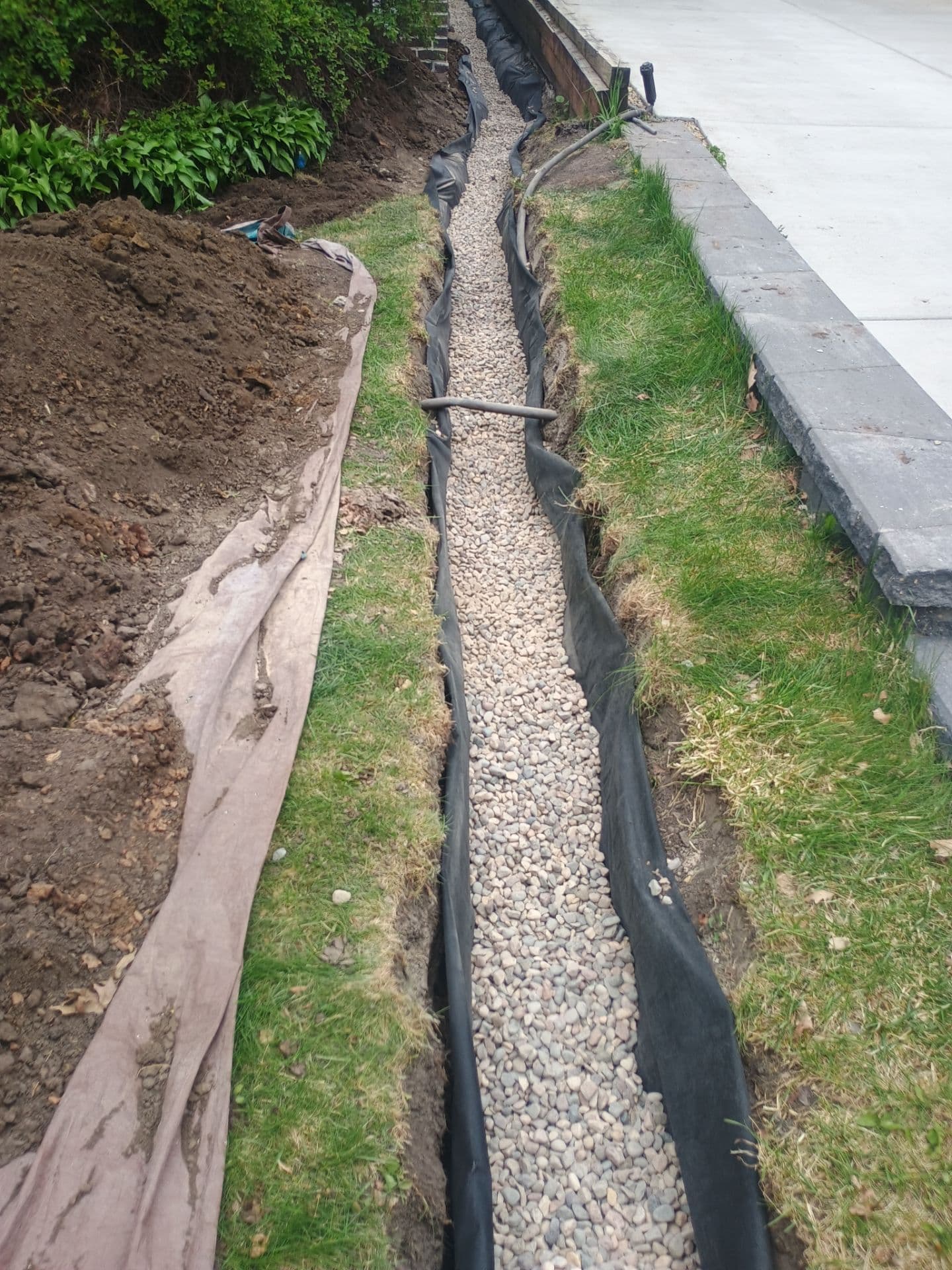
- •French drain if part of scope: perforated corrugated pipe, drainage aggregate, the filtration assembly specified for the soil and drainage design, and an approved outlet.
- •Downspout extensions or buried solid carrier lines to the reviewed suitable outlet.
- •Soil compaction as specified for the work; later settlement and site changes remain considerations.
- •Topsoil and seed finish in disturbed areas.
- •Cleanup of work areas, disposal of excess material.
- •Sod installation (we seed; sod is owner-elected).
- •Hardscape restoration (pavers, walls, fences).
- •Tree work or arborist coordination.
- •Sprinkler system repair if disturbed (owner coordinates with irrigation contractor).
- •Interior basement work (separate scope, see drain tile pricing).
When the wrong fix gets quoted.
Regrading is sometimes the wrong answer to a problem that needs interior drain tile, and vice versa. If both are proposed, each should have a clear purpose supported by the observed conditions.
Common ways exterior drainage gets misapplied:
- Recommended when the actual problem is groundwater. Surface corrections may reduce contributors but do not establish that below-slab pressure has been addressed.
- Used as a cheap substitute for needed interior work. A smaller project should have a defensible benefit and clear limits. Do not treat it as equivalent to a different repair simply because it costs less.
- Quoted without a site walk. Photos can support an initial review. Elevations, outlet feasibility, access and concealed conditions may still require site measurements before a final quote.
- No grade survey or measurements in the quote
- Collection pipe, aggregate or filtration details are missing from the proposal
- Buried downspout drain without specified exit point
- Disposal not included or listed as “TBD”
- Restoration scope vague or excluded entirely