

Pig's Eye and the founding.
The first official resident of Saint Paul was a Canadian-French bootlegger named Pierre Parrant, universally remembered by his nickname, “Pig's Eye.” In 1838, Parrant moved his operation to Fountain Cave on the north bank of the Mississippi, near what is now West Seventh Street. The settlement around his tavern became known as L'Œil de Cochon, French for “Pig's Eye.” In 1841, Father Lucien Galtier built a small log chapel atop the bluff and renamed the settlement after Paul the Apostle. Saint Paul became the capital of Minnesota Territory in 1849 and was chartered as a city in 1854.
What that means for waterproofing is that Saint Paul's oldest residential neighborhoods are older than almost every other built environment in the Twin Cities. The foundations we work on here include houses that pre-date the Civil War.
Cathedral Hill, Summit Avenue, and the Victorian era.
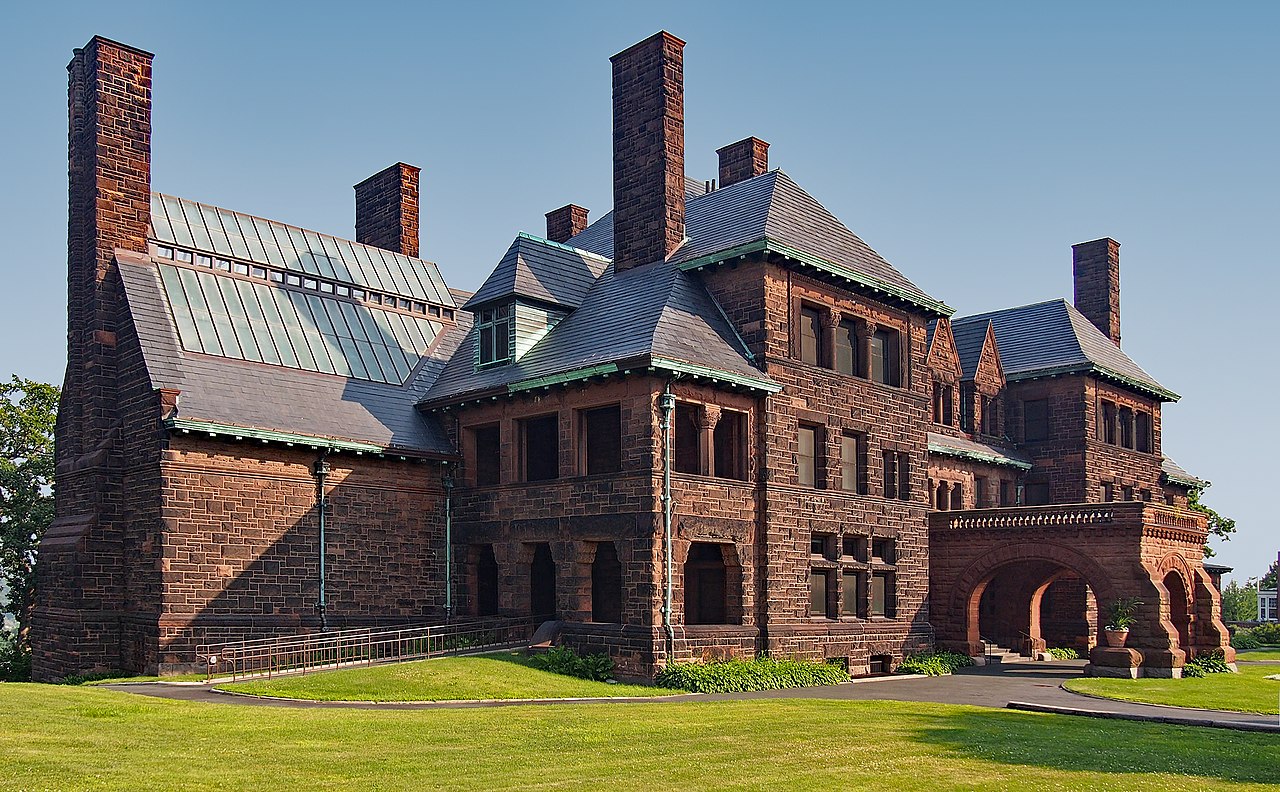
Saint Paul's late-19th-century growth produced some of the most architecturally significant residential blocks in the upper Midwest. Summit Avenue is the longest stretch of preserved Victorian-era homes in the country, Romanesque, Queen Anne, Italianate, Châteauesque, all of them masonry-heavy and almost all of them on quarried Platteville limestone foundations bonded with soft lime mortar.
Those limestone foundations were never engineered to keep water out. They were engineered to weep: builders expected moisture to migrate slowly through the porous stone and lime mortar and drain away through open joints. That design works fine for fifty years. After a hundred and forty Minnesota winters of freezing and thawing, the lime mortar has crumbled out of the joints, the stones have shifted, and the wall no longer weeps gracefully. It leaks. And almost every Cathedral Hill, Summit, Crocus Hill, and Ramsey Hill home has had the additional complication of modern interior finishes, drywall, insulation, sealed-in finished basements, installed against masonry that was designed to breathe.
Frogtown, the East Side, and the streetcar bungalows.
Outside the affluent hills, Saint Paul grew along its streetcar lines into dense neighborhoods of workers' bungalows, four-squares, and craftsman houses. Frogtown, the East Side, North End, Payne-Phalen, the West Side, and Dayton's Bluff all date primarily to the streetcar era between 1880 and 1930. Foundations from this period are a mix of fieldstone, brick, and early concrete block. The mortar is mostly lime-based and most of it has been crumbling for decades.
These neighborhoods are densely built with narrow lots and shared alleys, which makes water management harder than in suburban settings. There is nowhere for surface water to go horizontally because the houses are too close together. There is nowhere for it to go vertically because the till layer underneath is clay-rich. So the water sits at footing depth every spring and finds its way inside.
The Mississippi bluffs and the river bottoms.
Saint Paul sits on the bluffs above the Mississippi River, limestone and sandstone bedrock overlain by glacial till. The bluffs themselves are part of the reason the city exists: the high ground over the river was the natural site for a Catholic chapel in 1841 and a state capital eight years later. The geology below the bluffs is fundamentally different from the geology above them.
Up on the bluffs, Cathedral Hill, Summit, Crocus, Highland, homes sit on till over bedrock. The clay-bowl effect is the dominant water-intrusion pattern. Down in the river-bottom neighborhoods, parts of the West Side flats, Lowertown, sections of Dayton's Bluff close to the river, homes sit on alluvial sediments with a shallow water table that comes up to slab elevation every spring. The hill homes and the flats homes are completely different waterproofing problems.
Highland Park and the post-war infill.
The lots that had not been built on by 1930, mostly in Highland Park, the far East Side, and Como, got built on between 1940 and 1970. Highland Park especially was developed as an automobile-era neighborhood with broader lots and larger homes than the older streetcar neighborhoods. Foundations from this era are cinder block in the 1940s and 50s, transitional poured concrete in the 60s, and full modern poured concrete by the 1970s.
Why Saint Paul basements leak today.
A Saint Paul leak is one of four stories, and the city has more variation than any other municipality we work in:
- The Victorian / Edwardian limestone home on Summit, Crocus Hill, Cathedral Hill, or Ramsey Hill. Lime mortar crumbling, century-and-a-half of freeze-thaw, modern finishes trapping moisture in masonry built to breathe.
- The streetcar bungalow in Frogtown, Payne-Phalen, East Side, or West Side. Stone or early-block foundation. Narrow lot. Dense neighborhood with limited drainage horizons. Mortar joints failing.
- The post-war cinder-block rambler in Highland Park, far East Side, or Como. Hundreds of mortar joints failing, original drain tile silted, surface grading shifted.
- The river-bottom or floodplain property. Shallow water table sits at slab elevation every spring. Hydrostatic pressure at the cove joint is the primary failure mode.
What this means for your home.
Saint Paul is the most foundation-diverse city we service. The right system for an 1895 Romanesque on Summit is not the right system for a 1920s bungalow in Payne-Phalen, and neither is the right system for a 1955 Highland Park rambler. We diagnose first. We tell you what era your foundation is, what specifically is failing, and whether you need a full interior system or a smaller drainage correction.
For the Victorian-era homes, the conversation is usually about giving the water somewhere to go without making the wall's job worse, interior drain tile, disciplined humidity management, and careful undoing of moisture-trapping interior finishes. For the streetcar bungalows and post-war ramblers, a full interior system is often the honest answer. For the newer infill homes, the high-leverage opening move can be a sump replacement, a downspout and grading correction, and a flush of the existing tile. Those are obvious contributors worth investigating first, addressing them, depending on your goals for the space, can save thousands and extend the time before a full system is necessary.
Saint Paul has been a city for longer than Minnesota has been a state. The houses that built this city are worth keeping dry the right way.