

The three specs that actually matter.
Cast iron housing
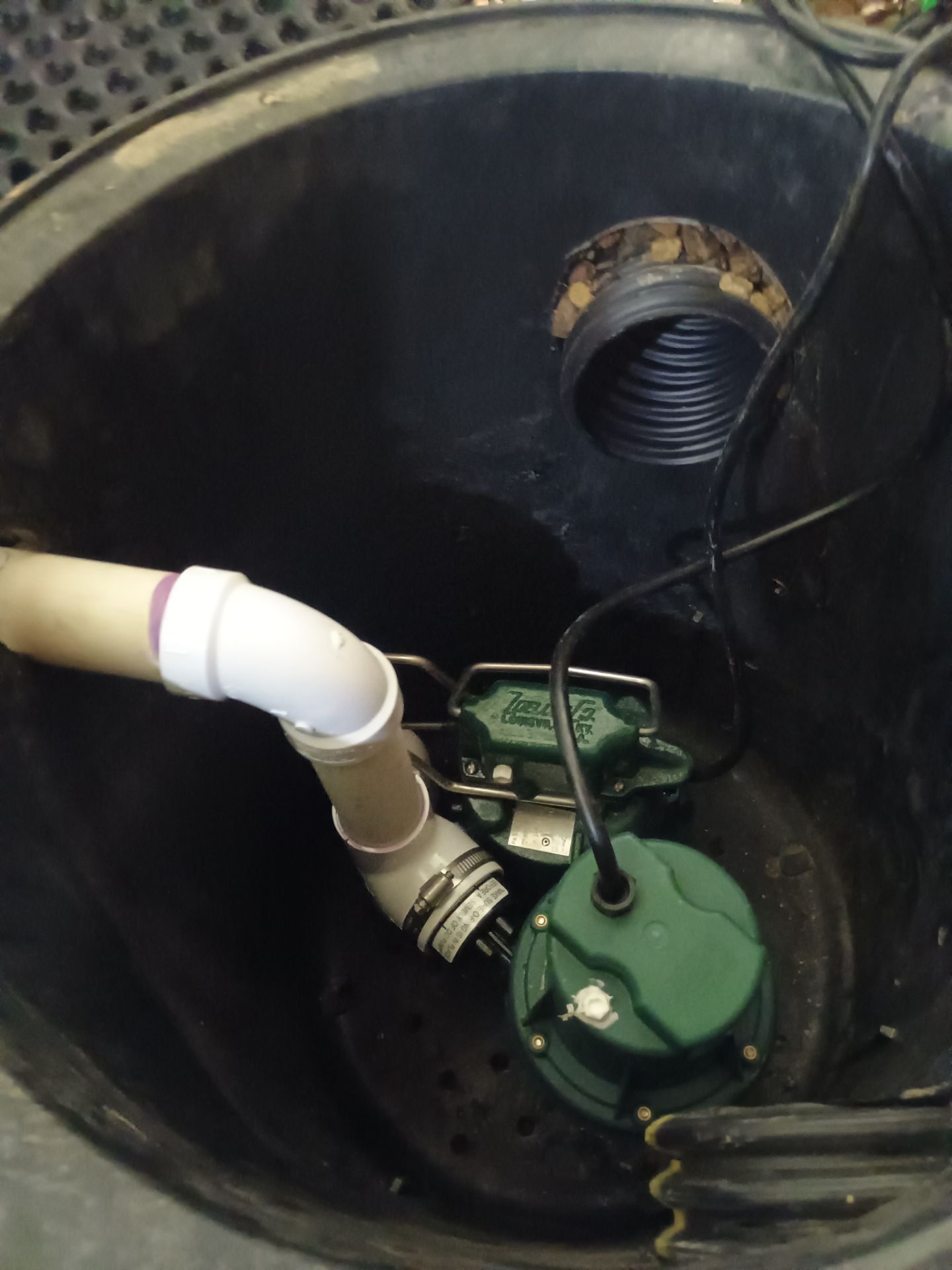
Submersible sump pumps run hot. The motor sits in a sealed oil bath, and during heavy spring runoff the pump may fire every couple of minutes for days at a time. The housing's job is to pull that heat into the surrounding sump water and dissipate it. Cast iron has roughly three times the thermal conductivity of thermoplastic. A cast-iron Zoeller stays within thermal tolerance during a multi-day storm. A plastic-housing pump traps heat, cooks the motor, and dies, almost always during the worst weather event of the year.
Permanent split capacitor (PSC) motor
Motors come in three common types for submersible pumps: shaded-pole (cheap, low torque, short life), split-phase (better, still fragile), and PSC (a permanent capacitor in the run circuit delivers high starting torque, smoother operation, lower energy consumption, longer life). The motor type isn't advertised on the box but it's in the spec sheet. Always look for PSC.
Vortex impeller and stainless hardware
Twin Cities basements collect more than water in their sumps, iron-ochre bacteria, silt, and occasional debris from older drain tile. A vortex impeller moves water by creating a spinning column without requiring water to contact the blades directly, which lets solids pass through without binding the pump. Combine that with stainless steel hardware on the float switch and fasteners, and you have a pump that doesn't rust shut during the dry months between flood events.
M53 vs M98, choosing the right pump for your basement.
| Zoeller M53 (1/3 HP) | Zoeller M98 (1/2 HP) | |
|---|---|---|
| Default for | Most Twin Cities residential basements | Heavier flow situations |
| Flow at 5 ft head | ~43 GPM | ~62 GPM |
| Flow at 10 ft head | ~30 GPM | ~43 GPM |
| Current draw | Lower, less heat, less wear | Higher, more lift capacity |
| Best for | Standard glacial-till basements, moderate water table | Sand-plain (Anoka, Blaine, Coon Rapids), lakeshore, larger catchment areas |
| Service life | Depends on installation and duty | Depends on installation and duty |
Pump selection should follow the observed load, basin, lift, discharge route, cycling, and manufacturer pump curve. WPNE uses an approved American-made Zoeller primary pump and states the exact model in the proposal rather than promising one universal model by neighborhood.
Optional backup power, the Spin 508 + approved AGM.
The pump is the only mechanical link between water in your basin and the lawn outside. Twin Cities power outages cluster around the exact storm systems that drop the most water on your foundation, a spring thunderstorm that takes out the grid for 4 hours is the worst case scenario, because that's also when the most water is hitting your foundation.
The backup WPNE offers is the Zoeller Aquanot Spin 508 with an approved AGM battery. It is optional and priced separately. WPNE confirms basin, primary-pump, power, check-valve, and discharge compatibility before installation; no backup eliminates all flood risk.
Why maintenance-free AGM
- Sealed, no electrolyte to check or top off. Flooded lead-acid batteries lose water over time and need periodic distilled-water top-ups. Most homeowners forget. AGM removes that failure mode entirely.
- Holds capacity in cold basements. An unfinished Minnesota basement runs 50-55°F year-round. AGM tolerates that better than flooded lead-acid.
- Deep-cycle service life. Sized to handle dozens to hundreds of pump cycles per outage without thermal stress.
- Runtime is load-dependent. Battery condition, inflow, cycling, head height, charger condition, and system configuration all matter; no fixed runtime is promised.
If a sales rep tries to sell you a flooded lead-acid battery for “cost savings,” you're saving $50 today to add a maintenance task you'll forget about in 8 months.
What to avoid, box-store pumps and franchise white-labels.
- •Approved American-made Zoeller primary pump, with the exact model selected for the measured duty and named in the proposal
- •Tethered float switch, more reliable than vertical switches in real basins
- •Sealed sump basin lid with vent and access port, reduces radon and humidity
- •Check valve at the basin with 1.5″ PVC discharge
- •Optional Zoeller Aquanot Spin 508 + approved AGM battery, when selected and compatible
- •Discharge to daylight 10+ feet from the foundation
- •Plastic-housing pumps marketed as “quiet” or “efficient”
- •White-labeled “exclusive proprietary” pumps with no published spec sheet
- •Shaded-pole or split-phase motors marketed as “premium”
- •Pumps without thermal overload protection
- •Flooded lead-acid batteries that need water top-ups to stay reliable
- •Discharge dumping within 3 feet of the foundation (you're re-flooding yourself)
On franchise “exclusive” pumps: the honest answer to “who manufactures this” is almost never “we make it.” A handful of pump factories produce hardware that gets badged and sold under dozens of brand names. The product might be fine. But you should know what you're buying, particularly because replacement parts often only flow through that one franchise, and if they go out of business or change suppliers, your pump becomes orphan hardware. Zoeller publishes their specs, sells parts through independent plumbing supply, and has been building submersible pumps since 1939. If WPNE ever stops existing, your Zoeller pump is still serviceable by any plumber in the country.
The 10-minute test that catches failures before they cost you.
Once a year, ideally in early spring before the wet season:
- Pour 5 gallons of water into the basin slowly. The float switch should rise, the pump should kick on, and the basin should empty in under a minute.
- Listen for the failure modes, grinding, screeching, motor laboring without lifting water, rapid on-off cycling.
- Check that water is actually discharging outside the foundation. Walk outside and confirm. A pump that runs but doesn't discharge has a failed check valve or clogged line.
- Clear any debris from the basin, silt, gravel washed in over winter, anything obstructing the float.
- If you have a battery backup, run its documented self-test and inspect it on the manufacturer's schedule. AGM batteries do not need electrolyte top-offs, but they still age; replace based on condition and manufacturer guidance.
If anything in step 2 sounds wrong, replace the pump beforethe next storm. A planned replacement on a sunny afternoon costs less than an emergency replacement at 2 AM during a tornado warning, and yes, that's when these pumps tend to fail.