

The question every seller is really asking.
Almost every basement we walk into in a 1960s or older Twin Cities home has some evidence of moisture. Efflorescence at the base of the wall. A faint stain line. A cove joint that has weathered. The buyer's inspector knows this too. They are going to find it. The seller's position depends entirely on what happens before they do.
This article is for two audiences. Sellers who are preparing to list and wondering whether to address a known basement issue first. And real estate agents working with those sellers. The decision is not one-size-fits-all, but the framework that gets you to the right answer is.
Three options when you find a basement issue before listing.
When a seller is on the fence, there are three honest options. Each one has a defensible case in the right circumstance. Each one has a wrong case too.
| Option | Sells for... | |
|---|---|---|
| A | Fix before listing | Higher list price, faster sale, fewer contingencies |
| B | Disclose and price it in | Lower list price, faster close, no surprises |
| C | Do nothing, hope | Risks deal collapse during inspection, often worst outcome |
We are obviously a waterproofing contractor. We benefit when you choose Option A. We are still going to tell you that Options A and B are both legitimate and Option C almost never works out, and let you make the call from there.
Fix it before you list.
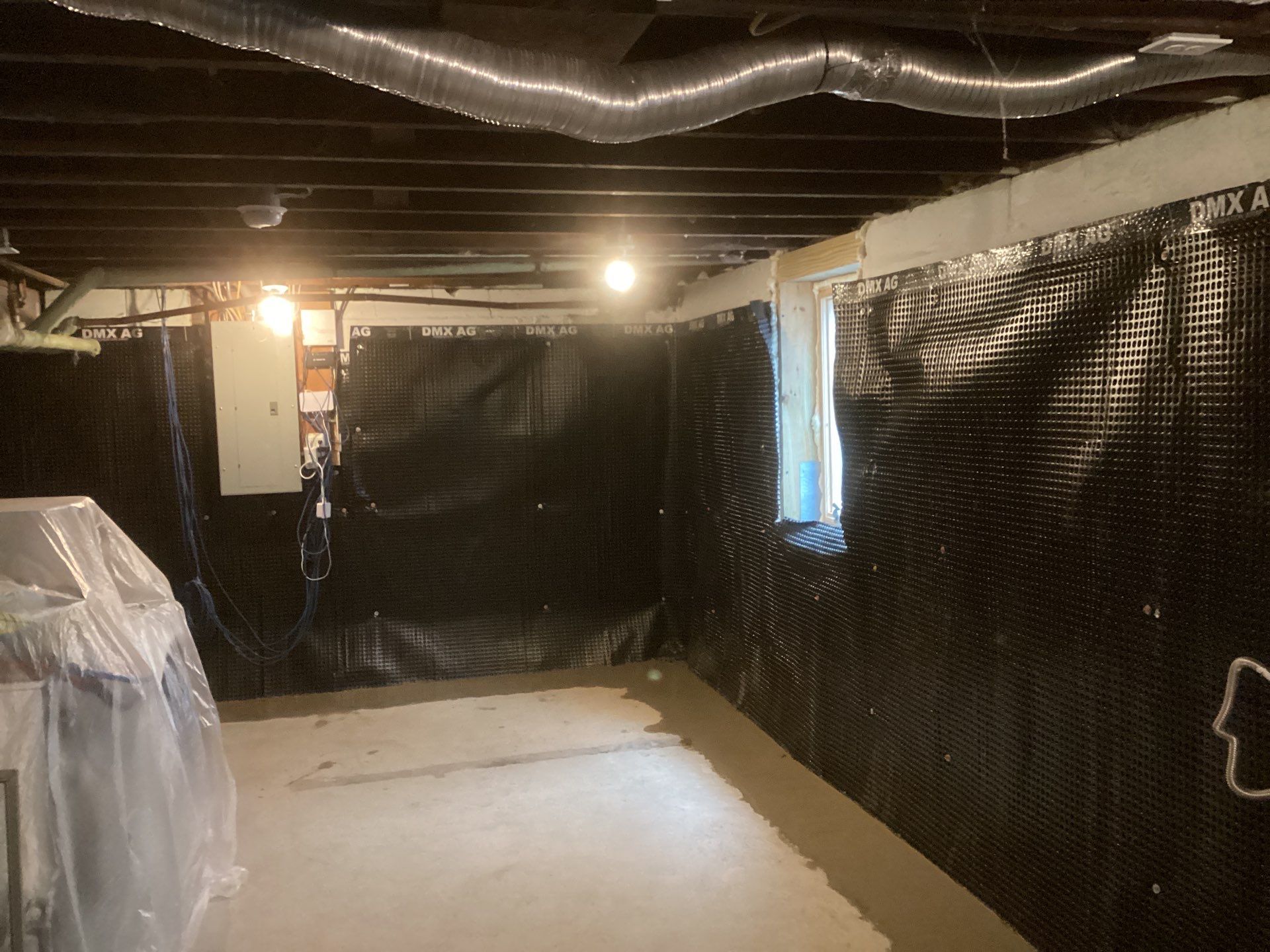
Fixing a diagnosed issue before listing can reduce uncertainty, but no contractor can promise a particular sale result. The useful disclosure package is factual: what WPNE installed, the exact footprint, equipment details, completion evidence, and the written coverage and transfer process stated in the signed agreement.
This option is most valuable when:
- The issue is real and would be visible to any competent inspector
- The market is competitive and the home would benefit from a marketing edge
- The seller has 30+ days before they want to list
- The scope-specific quote fits the sale budget. Current interior drain-tile planning tiers span $5,000 to $25,500+; length, access, equipment and selected options determine the written quote
A completed, documented repair gives a buyer different evidence than an unresolved issue and a negotiated credit. The value depends on the work, records, and exact signed terms.
Before describing warranty coverage or transfer in a listing, use the written warranty. The new homeowner must give WPNE written notice within 30 days of property transfer. WPNE's installed work, equipment, completion evidence, exclusions, and transfer process should be represented factually; no sale outcome or buyer reaction is guaranteed.
Disclose, price it in, and let the buyer choose.
Sometimes the timeline does not allow for a fix before listing. Sometimes the seller does not want to front the cost. Sometimes the issue is small enough that a price adjustment is cleaner than a project. In those cases, Option B is the right move.
What Option B looks like in practice:
- Get a written quote from a licensed waterproofing contractor. We charge a flat $250 assessment fee for inspections on homes in any sale phase, refundable against the project if we do the work, and we do these routinely.
- Attach the quote to the seller's disclosure so the buyer knows the scope and price up front.
- Set the list price with the issue baked in, or offer a credit at closing equal to the quoted scope.
- Move on with the rest of the sale.
This works because it removes uncertainty. The buyer is not guessing what the fix would cost, they are looking at an actual quote from an actual contractor. They can choose to do the work themselves, hire someone else, or hire us. The seller is out of the conversation.
Do nothing and hope the inspector misses it.
Option C is technically a choice. It is almost always the wrong one.
Inspectors are professionally incentivized to find issues. Basement moisture is one of the easiest things to spot. Efflorescence shows up on a moisture meter and to a flashlight. Stains are visible. A musty smell is detectable in 30 seconds. An inspector is going to find it.
When the inspector finds it without prior disclosure, three things happen:
- The buyer panics. Their first quote (from a contractor they pick under stress, often the first one that calls back) is usually higher than what the work actually costs.
- The buyer assumes the issue is bigger than it is. A stain line gets interpreted as a major water problem. Negotiation drops the price by far more than the actual fix would have cost.
- The buyer's trust in the seller drops. If they hid the basement issue, what else did they hide? Negotiations get worse on every other line item too.
The negotiating loss from a discovered issue is almost always larger than the cost of fixing it before listing.
Minnesota law (Statute 513.55) requires the seller to disclose material facts that affect the property. Known water problems generally qualify. Lawyers can argue the edge cases, but the practical answer is the same one we just walked through: you are going to lose more on the inspection than you would have spent on the fix.
How to decide which option fits your situation.
Walk through these in order. The first question that triggers a clear answer is your answer.
- How big is the issue? Hairline crack with a small stain is a different problem than active water on the floor. For small cosmetic issues with no active water, Option B (disclose, no quote needed) is often fine. For active water or visible damage, you need a quote either way, so the cost of Option A is already partially sunk.
- What is the market like? Hot market with multiple bids, Option B works because the buyer pool absorbs the disclosure. Slow market with limited demand, Option A becomes more valuable because the marketing edge matters more.
- How much time do you have? 30+ days before listing, Option A is possible. Less than 30 days, you are looking at Option B.
- What is the fix cost vs the home price? $10,000 fix on a $400,000 home is 2.5%, easy ROI. $10,000 fix on a $180,000 home is 5.5%, marginal.
- Has the buyer or their inspector already raised it? If yes, you are out of Option C and into a renegotiation. The fastest path back to closing is usually a quote in hand from a contractor they trust.
A documented system makes the transfer conversation clearer.
The warranty transfer is the part of Option A that most sellers do not think about until we explain it. A typical drain tile install gets buried under 2 inches of concrete and disappears from view. From the buyer's perspective, six months later, they cannot tell whether anything was actually installed or whether the seller papered over a paint stain.
A written transferable warranty answers that question in writing. If the new homeowner gives WPNE written notice within 30 days of property transfer, the workmanship promise transfers with the covered work. Buyers respond to that because it converts an invisible repair into a documented one.
Read the full warranty terms. The new homeowner should give WPNE written notice within 30 days of the property transfer.
If you decide to fix, the schedule.
For sellers choosing Option A, here is what the typical timeline looks like:
- •Day 1. Call us. Inspection scheduled within 48 hours. $250 assessment fee, refundable against the work if we do the project.
- •Days 2-3. Inspection on site. Written quote within 24 hours of the inspection.
- •Days 4-7. Seller decides on scope. Contract signed.
- •Days 7-14. Install scheduled. Most interior drain tile installs are 2 to 4 days from breaking concrete to final cleanup.
- •Day 14-18. Photos taken for the listing. Disclosure updated. Listing goes live.
- •Waiting until you are 5 days from list to start the conversation. Tight, but possible if everything aligns.
- •Skipping the written quote step and just “hoping” to install in time.
- •Forgetting to capture the warranty transfer paperwork for closing.
Real estate agents working with listings on a tight timeline can call us directly. We carve out slots specifically for transaction-stage work. See our real estate partner page for the workflow.
When fixing before listing is the wrong call.
We are a waterproofing contractor. We are not going to pretend that every basement needs the work. Here are the cases where we would tell a seller not to do the work:
- The issue is genuinely cosmetic. Old stain line, no active moisture, no efflorescence, no smell. A coat of basement paint and an honest disclosure are usually enough.
- The home is priced to flip or in fair-condition territory. Buyers in those segments are already pricing in deferred maintenance. A waterproofing investment may not return.
- The seller has less than 2 weeks and a finished basement. Drain tile in a finished basement requires demo and pull-back of flooring near the perimeter. We cannot redo your basement before the listing photos, and we are not going to pretend otherwise.
- The fix is structural, not waterproofing. Bowing walls, major foundation cracks, or settling are jobs for a foundation specialist. We will tell you and refer you.
In all those cases, Option B (disclose, price it in, attach a quote if one is needed) is the right answer. We will write the quote either way.
If you are a real estate agent or seller and you have a transaction or a listing where the basement is on the table, call us. Inspection within 48 hours, written quote within 24 of the inspection. Flat $250 assessment fee for any home in a sale phase, refundable against the project if we do the work. We will tell you honestly whether the fix is worth doing before listing or whether disclosing it is the cleaner play. See the full workflow.