

What the smell actually is.
The chemical compound responsible for that distinctive musty smell is geosmin and a family of microbial volatile organic compounds (MVOCs) produced by mold and mildew as they metabolize organic material. Geosmin is one of the most powerful natural odorants known, the human nose can detect it at concentrations as low as 5 parts per trillion. That's why a small patch of hidden mold can produce a smell that fills an entire basement.
The smell is not the problem itself. The mold growing on damp material is the problem. The smell is just how you know it's there. Air fresheners and ozone treatments mask the smell temporarily without addressing the moisture source that's feeding the growth. The mold comes back, the smell comes back, you're no further ahead.
When there's smell but no visible water.
Many basements with strong musty smell have no visible standing water, no puddles, no wet spots on the floor, no obvious leak. This is what makes the diagnosis confusing. The homeowner reasonably concludes “there's no water problem,” cleans up the basement, runs a dehumidifier, and the smell comes back within a few weeks.
What's happening is persistent high humidity rather than acute water entry. Three common sources:
- Foundation wall moisture migration, water in the soil outside slowly permeates through the concrete or block wall as vapor, raising basement humidity
- Slab moisture migration, same mechanism through the floor slab, especially if there's no vapor barrier under the concrete (common in pre-1980 construction)
- Cove-joint seepage during rain events only, small amounts of water during storms that dry quickly but feed humidity in the meantime
A basement that smells musty all year despite a running dehumidifier is telling you the moisture source is constantly being replenished, not stored.
Three sources to eliminate, in order.
The diagnostic order matters. Address the cheapest, most-likely cause first; only move to expensive fixes if the cheaper ones don't solve it.
1. Visible mold or wet material (do first)
Walk the basement systematically and look for: damp drywall, wet cardboard boxes, soaked carpet padding, water-stained sheetrock, anything that's actively damp to the touch. Remove it. Dispose of soaked organic material rather than trying to dry it, once mold colonizes a surface, removing the surface is faster and more reliable than killing the mold in place. This single step often drops the smell by 70% within a week.
2. Visible water source (do second)
Walk during or right after a heavy rain. Look for: water along the cove joint, efflorescence on walls, damp patches near floor cracks, water in the sump pit that's rising actively. If you find visible water, you have a waterproofing problem, not just a humidity problem. The smell is a symptom, the leak is the cause. See our drain tile page for what an actual fix looks like.
3. Persistent humidity without visible water (do third)
If steps 1 and 2 don't reveal a source, you're dealing with chronic vapor migration. Install a humidity meter and check it weekly. If basement relative humidity is consistently above 60%, you have a vapor source, even without standing water. The fix here is usually a combination of:
- A wall vapor barrier (drainage board + polyethylene membrane) on the perimeter wall, tied into drainage if there is any
- Mechanical dehumidification sized to the space. This is HVAC territory rather than ours, so talk to a licensed HVAC contractor about the right unit and how to drain it
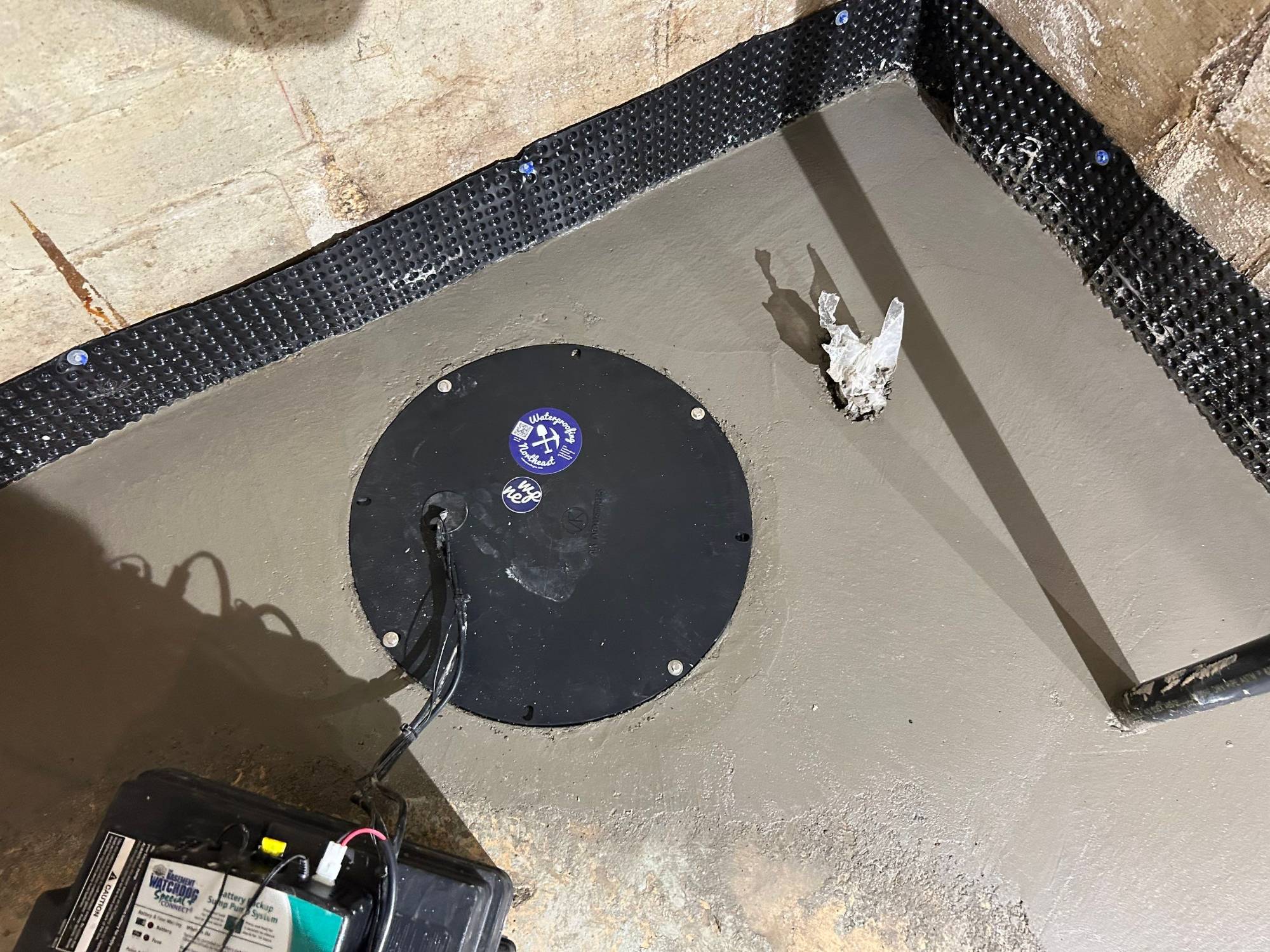
- Sealed sump basin lid. An open sump is a major humidity source by itself
The real fix, source first, then dehumidify, then replace.
The sequence matters. Most homeowners do it backward and pay for the same fix twice.
- •Step 1: fix the moisture source (drain tile, vapor barrier, sealed sump, working pump)
- •Step 2: bring in HVAC for dehumidification once the source is handled. Sizing and drainage of a dehumidifier is their lane, not ours
- •Step 3: remove and replace porous materials that absorbed moisture (carpet, drywall, cardboard storage)
- •Step 4: monitor RH with a $20 meter to confirm the fix held
- •Sealed sump basin lid if you don't have one. The open sump is a vapor source
- •Replace carpet first, hoping the smell came from the carpet (it didn't, the carpet was a victim)
- •Bleach the visible mold and call it done (kills surface mold, doesn't stop the moisture source)
- •Ozone treatments (mask the smell temporarily, expensive, mold comes back)
- •Install plastic sheeting on dirt crawl space floors without sealing the perimeter (creates a sealed-up moisture trap)
- •Skip the wall vapor barrier when finishing the basement (you're sealing the moisture problem behind drywall)
What doesn't work, and why.
Air fresheners and ozone
Plug-in air fresheners mask MVOCs with a stronger smell. They don't kill mold or address moisture. Ozone treatments do kill mold and odors temporarily but require evacuating the space (ozone is harmful to humans and pets), and the mold returns within weeks because the moisture source is unchanged.
Dehumidifier alone
A dehumidifier will reduce humidity while it's running. The minute you stop running it, humidity climbs back. If your basement humidity rises within a week of unplugging the dehumidifier, you have a vapor source somewhere. A dehumidifier alone is treating the symptom. It can be part of the right answer once the source is fixed, but the specifics of which unit and how to plumb it are an HVAC conversation, not a waterproofing one.
“Encapsulating” without drainage
Some companies sell “basement encapsulation”, wrapping walls and floors in plastic sheeting without addressing drainage. On a crawl space with no active water, this can work. On a basement with seepage, you're creating a sealed moisture trap that produces a worse problem two years later when the plastic comes off and reveals a wall of black mold growing in the dark behind it.
The honest answer for a musty Twin Cities basement: find the moisture source, fix it permanently, then dehumidify and replace damaged porous materials. In that order. Anyone who promises to fix the smell without diagnosing the source first is selling you a temporary win that won't survive the next spring.